Monday, January 30, 2006

"Don’t be one of those people who throw papers in the public street!" [JANUARY 29, 2006]

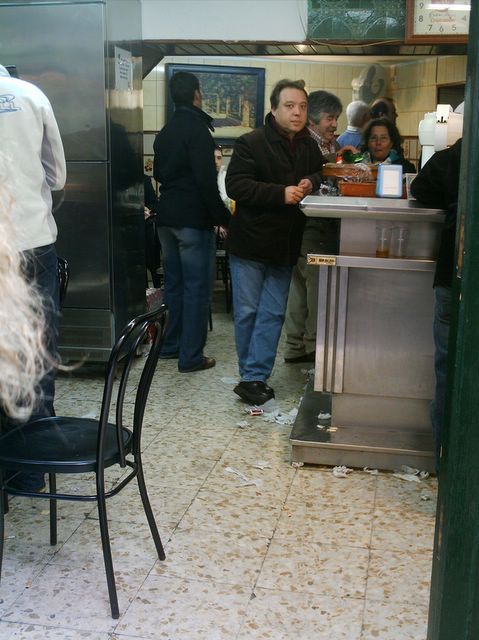
An American, a Czech and a Spaniard walk into a bar. They each order a coffee and, once the barman serves them, they each tear open the sugar packet that came with their drink and mix its contents in. The American crumples up the empty packet and leaves it on the counter. The Czech neatly folds it in half and places it between the cup and the saucer. The Spaniard just tosses it on the floor along with the spent cigarette dangling from his lips – despite the fact that there’s an ashtray directly in front of him. There’s no punch line to this joke, folks. Anyway you look at it, the Spanish are pigs.


"Yeah, that's my trash on the floor. You got a problem, amigo?"

Now I know that people litter no matter what country or corner of the globe you’re in. It’s a fact of life and one that people who respect the environment cringe at the sight of. In most industrialized nations, the government in conjunction with these deep-rooted environmentalists form some sort of campaign to stop the pollution of our planet. Such a simple thing, they tell the populace, as placing your empty gum wrapper in a bin instead of on the street can make a world of difference. Everyone is always on the lookout for a litterbug and people generally turn up their noses at the sight of one. At the end of the day, those who litter form the minority of an environmentally-conscious whole.

In Spain, however, the opposite seems to be true. Everyone litters. People toss papers, cans, bottles, bags, fruit skins, empty cigarette cartons, sandwich wrappers, warped umbrellas, toilet seats, fruit & vegetable crates, broken light bulbs, diapers and whatever else you can think of onto the street and into the sea. In the cafés, customers ignore ashtrays, tables, and counters and opt for the floor as their trash bin of choice. Stranger yet, the proprietor gladly sweeps up after them every few minutes because he views this kind of behavior as normal. I wouldn’t be surprised if that very café owner tosses his trash on the floor too when he visits other cafés. And on the streets, it’s even worse. Wherever one spots a group of Spaniards, there will always be a few pieces of litter left in their wake – sprinkled by the omnipresent shells of those sunflower seeds they so dearly love to eat.
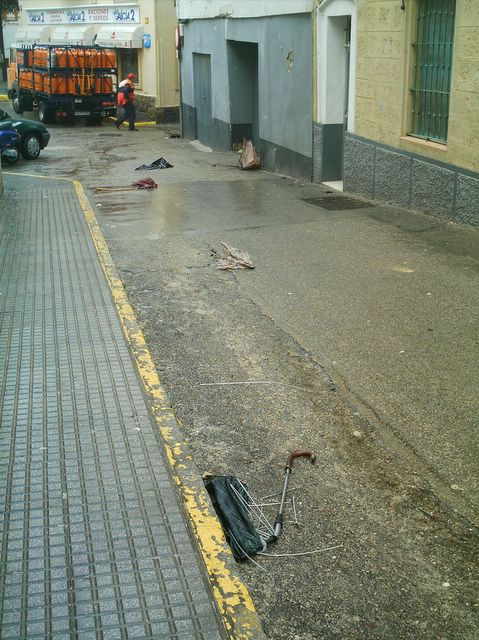

Where the hell did all those umbrellas come from?
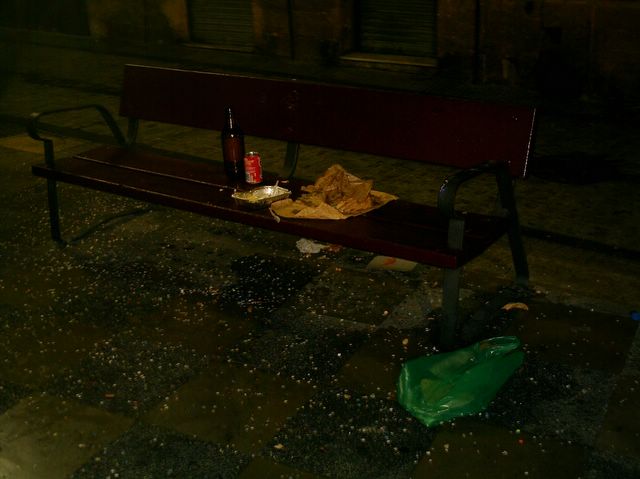

Just a regular park bench after a little snack... sunflower shells included

As far as I can tell, the Spanish must see it as their God-given right to litter. At any time of day, on whichever street corner of Cádiz you find yourself, you’re bound to find at least one piece of litter strewn on the cobblestoned pavement below. Even when you look over the city walls towards the sea – onto the massive boulders that protect the residents from the crashing waves of the mighty Atlantic – one can’t help but notice the piles of trash that haplessly have been tossed aside here. These boulders have now become a feeding ground for stray cats and seagulls as they scavenge the litter and pick at anything that might resemble a morsel of food. This type of behavior is even more difficult to understand when one considers that the sea has been this city’s lifeline since the day it was founded. Recently, in these times of rough unemployment, it has been one of the only reasons why tourists come to visit. A "day at the beach" must contribute hundreds of thousands of euros to the struggling local economy and yet, still, the Gaditanos view the Atlantic as nothing more than their local dump. If they can’t toss litter into the vast ocean, then where should they?
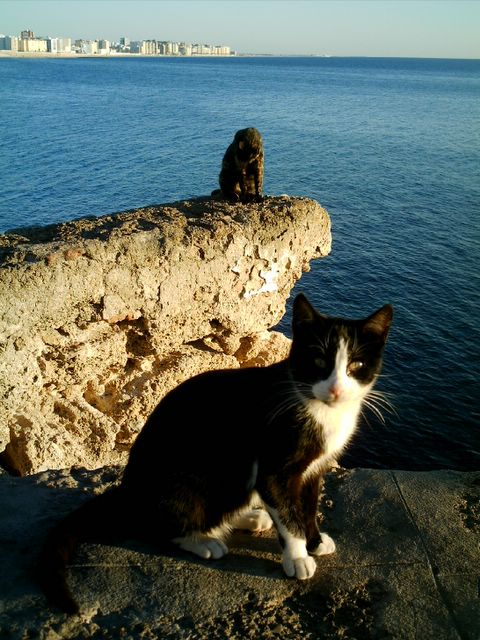

Ahh, Cádiz! Postcard picture perfect - just... ...DON'T LOOK DOWN!

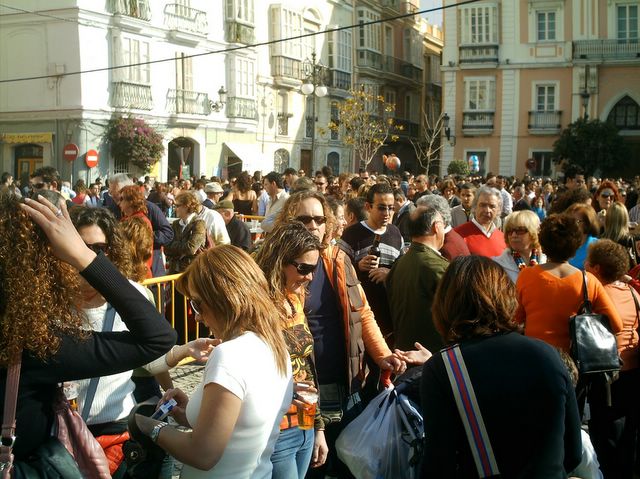
The zenith of all this littering, though, occurs during public festivals or Carnaval, which is fast approaching at only a month away. The pre-Carnaval celebrations that have been going on over the past two weekends have been a sign of things to come – piles of trash scattered throughout the streets. As we were walking around this Sunday (Erizada, or Sea-Urchin Fest, was taking place in our neighborhood) we found it difficult to ignore how much litter had accumulated outside our door. I understand that oftentimes, especially during public celebrations, there may be no trash can or bin of any sort available for public use in the vicinity. But this isn’t the case in Cádiz. Before each Fest, the city sets up extra bins every few steps away for the revelers to use... but they simply ignore them. We saw countless piles of trash strewn on the ground while practically empty bins stood in their midst. I don’t understand. How difficult can it be to lift your arm and throw that bottle or used plastic plate into the empty bin by your side? We even saw a couple of people using the trash bin tops as tables to rest their food and drinks on or, even worse, they would simply pile their trash on top of the bin without bothering to open it– as if a plastic cover can be that heavy!


Spain's only Environmentalist:
"Where's the trash bin? Oh well, I'll just leave my dirty cups and plates on this plastic lid."


The littered remains of pre-Carnaval fun... ...And the empty trash bin next to it.

One of the most frightening things in all of this littering-mayhem is the attitude of Spaniards – even what must be environmentally-conscious Spaniards if they actually do exist – towards others who pollute. The locals really don’t give a damn at all. In fact, none of it seems strange in the least to them. Why walk to a bin, the local reasoning must go, when you can just as easily toss it on the ground? And this kind of conditioning to a lack of environmental awareness starts young and continues into adulthood. Not once have I seen a child reprimanded for dropping a candy wrapper, or an adult look at one of his fellow countrymen and shake his head in disgust as someone soils his beloved España.

I don’t want to try and rationalize this behavior and, frankly, I’m really not sure why the natives of this lovely land treat their country in such a manner, but I think it might be subconscious. They’ve been programmed to think this way. For example, as far as I know, there is no word in Spanish that litter can be directly translated into. All there is that I could find was basura, or trash, and papeles, which literally means papers. And as for the verb to litter the nearest one can come to translating it is either ensuciar, to get something dirty, or tirar papeles, to throw papers. Even litterbug, or litter lout as the Brits say, can only be rendered into Spanish as persona que tira papeles en la vía pública, or person who throws papers in the public street. No wonder there’s so much litter and no public campaigns to improve the environment here in Spain. The catchy saying we have back home, "Don’t be a litterbug!" doesn’t seem quite as catchy when translated into "Don’t be one of those people who throw papers in the public street!"
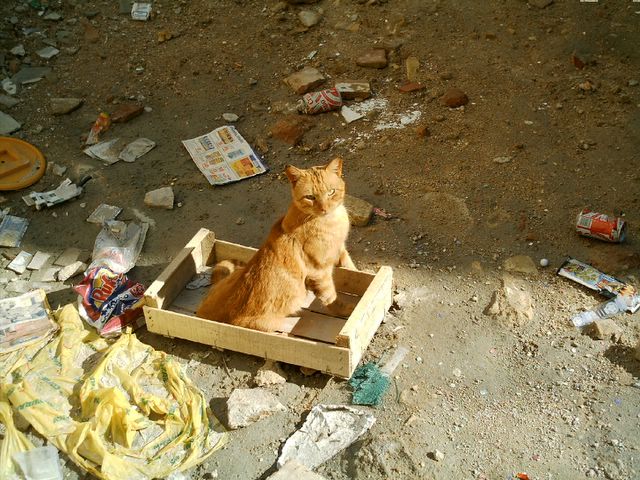

"I love litter! Without it, I'd be homeless."

When you take these linguistic shortcomings into mind, it starts to explain some of the Spanish attitude towards litter. But what really completes the picture is how much the government – both local and national – must spend on cleaning up after its citizens. Cádiz, more or less, is quite a clean city especially when you take into account how much people litter. This is due to one thing and one thing alone – the ever-vigilant local garbage-men. Trash is collected every night outside each resident’s door and the streets and trash cans (both public and private ones) are sprayed down clean with a high-powered hose using a disinfectant liquid mixture. Well actually, that’s not completely true. First a group of garbage-men SWEEP the street and then they spray it down... And this happens practically every night and sometimes even during the day too! When I first moved here and would walk home from a bar at two or three in the morning, I was always curious as to why the streets were all wet when it hadn’t even rained a drop. It took me a few months before I figured out those damp cobblestones were all that was left of the Garbage-Man Posse’s evening stroll through the city.

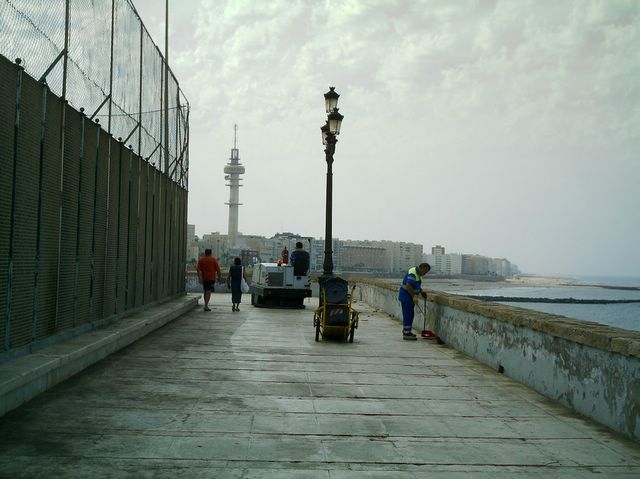
I salute ye, O brave Garbage-Man! Vigilantly cleaning the streets both at night and at day! Litter, beware!
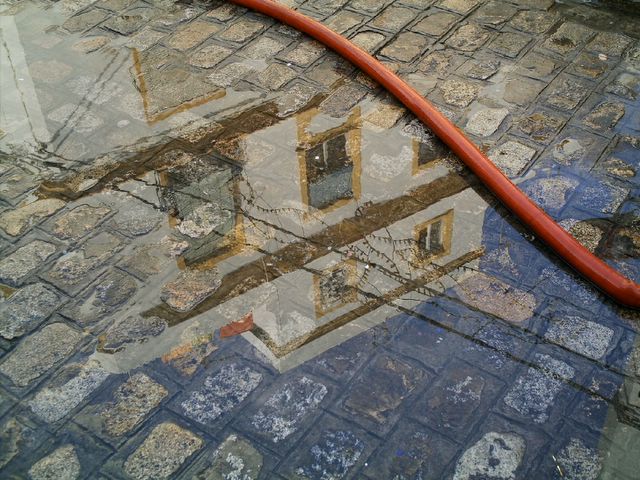

Who can wash the streets down and make the mornings shine?
The Garbage-Man can! The Garbage-Man can!

After a foreigner in Spain considers all of these factors, he can begin to at least try and understand the local attitude to litter. Now I’m not trying to excuse them, but the way the residents of Cádiz see it is "Why clean up when someone else will do it for me?" And even if they don’t know that someone is cleaning up after them, when a Gaditano wakes up the next morning, he inevitably finds his city as clean as a whistle and litter free. Who cares where the trash went as long as it’s gone? The entire situation reminds me of when I cook a little snack or make myself some coffee and pile up the dirty dishes in the sink. The next day they’re all inevitably gone too – cleaned and put away in the cupboard. How they got washed and placed there (although I do suspect my girlfriend may be somehow involved), I’ll never know. But then again, do I really care? As long as the sink is empty and the kitchen is clean, I’m happy. I suppose the Spanish are the same way when it comes to their litter.

Monday, January 23, 2006

Oysters, Fiestas, and Fun... Oh My! [JANUARY 22, 2006]

According to the Spanish Ministry of the Interior, Cádiz has the highest unemployment rate in the nation at over 30%. Property values here are also ridiculously over-priced (The average two bedroom apartment goes for about €180,000, or $220,000). As a result of these two factors, most young people throughout the city are forced to live with their parents well into their thirties. But it’s not only the budding adults that share that same roof... Often times Gran’Ma and Gran’Pa have no choice but to live there as well. This all implies, of course, that there are usually three generations of Gaditanos (as the people of Cádiz are called) crammed into the same stuffy apartment. The twenty-five year old male in the household definitely gets it the worst when it comes to these living arrangements. If he wants to call in some girlie action after a long night of bar-hopping and flirting, he has to wake up his kid sister and grandmother – whom he probably shares a bedroom with – and tell them to wait outside in the living room while he and his new romantic interest try to do the horizontal mambo as quickly and quietly as possible. That is, of course, if he hasn’t opted for the always popular dimly-lit park-bench or beach-side option. Poor bastard. I’d put a bullet through my head if I were him.

But pessimism doesn’t seem to be in the nature of a Gaditano. When life looks down on them and hands them yet another job application rejection, mortgage refusal, or denial by Granny to leave the bedroom at two in the morning, a Gaditano will just smile back at them all and do what comes most naturally... fiesta! That’s right. Party, party, party. The folks down here don’t seem to know how to do much else and seeing as most of them don’t have a job anyway, nothing seems to stop them from partying at all hours of the day. At night they fiesta until dawn with friends and colleagues while during the sunlit hours they do it with those nearest and dearest to them – Granny and that little kid sister. Fiesta, it appears to this foreign observer, is the Gaditano’s most prized panacea.


I know what'll solve our economic woes... FIESTA!!!

The King of all Fiestas, however, is none other than Carnaval. No other city on the Iberian Peninsula celebrates this ten-day bash with more bangs, ballads and booze. Some people take off from work (at least those that have a job do) during the entire period as others hardly step foot in their homes for an solid week. There’s always something to be celebrated, and drunk, in the streets. In fact, there is so much drinking and revelry going on during Carnaval that the first Monday after the weekend when it kicks off is a local public holiday – officially titled Lunes de Resaca, or Hangover Monday – when all banks, schools, and offices alike are legally closed for business. If there’s one thing a Gaditano is most fond of celebrating when it comes to his or her city, apart from perhaps a victory from the local football club C.F. Cádiz (see ¡óE, el Fútbol! [JUNE 26, 2005]), it’s Carnaval and they’re not ashamed to do it all out. There’s only one problem though. Carnaval only comes around once a year and, according to my calendar, is nearly a month and a half away.

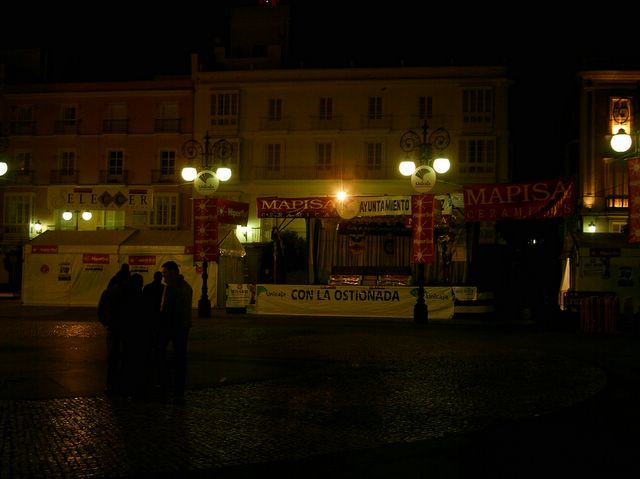
But a little technicality like five weeks is nothing to fret about. The Gaditanos have it covered. Why wait for the official Carnaval at the end of February when the city can throw a pre-Carnaval fiesta in the middle of January? Well, that’s exactly what they’ve done this past weekend. On Saturday night there was a little warm-up fiesta called Pestiñada where the city gave away these little fried pastries called pestiñas (which, frankly, I find disgusting) and a shot of an anise-based liqueur. That fiesta was held in the same square as, and simultaneously to, the official welcoming of this year’s "Goddess of Carnaval" contestants. After they did their little stroll in the spotlight and each potential Goddess had been properly introduced, the judges packed up and the twenty- and thirty-somethings soon took over the square, as usual, with their weekly outdoor drinking fiesta Botellón. (I haven’t gotten around to writing an article about that local phenomenon yet but one is coming soon.) Either way, one square down the road, the city employees were busy setting up what would be the true pre-Carnaval fiesta of the weekend – Sunday’s day-long Ostionada, or Oyster Fest.


Preparing the stage for Oyster Fest 2006... It's gonna rock!


And the morning of...
"I've been waiting all day. I hope this year's bands don't SUCK."

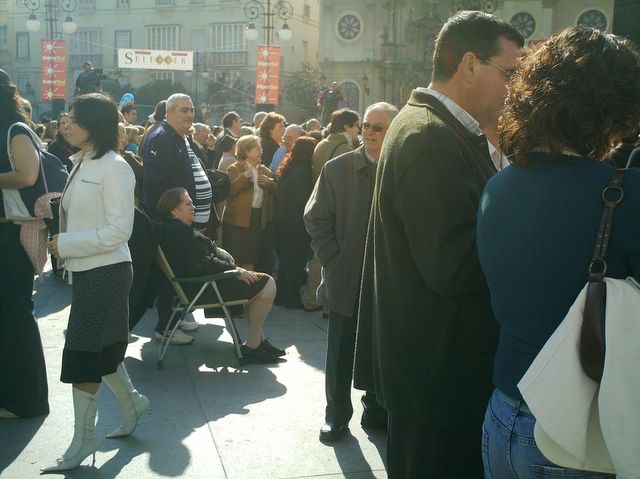
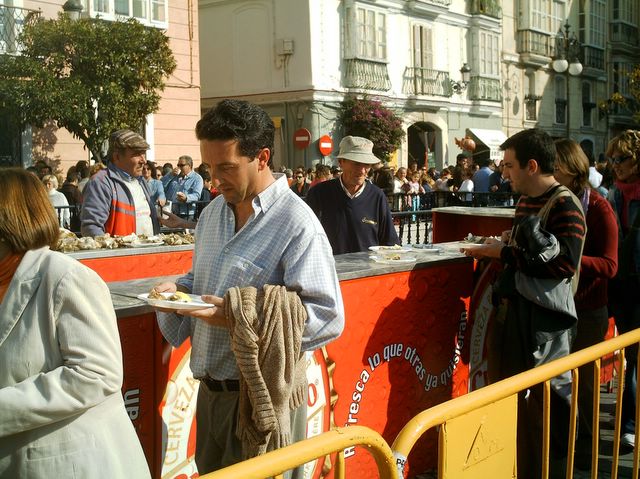
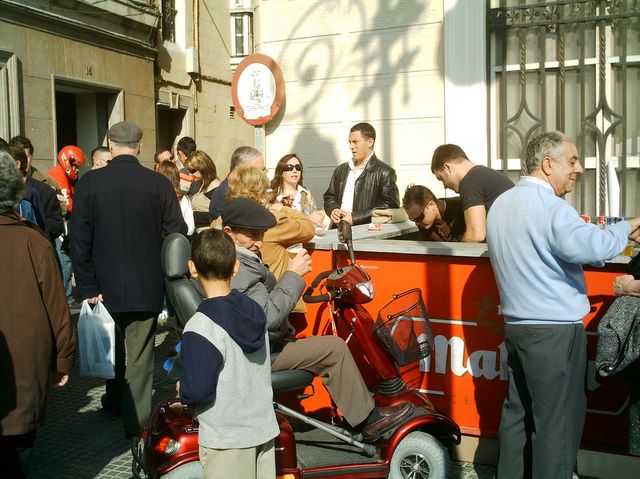
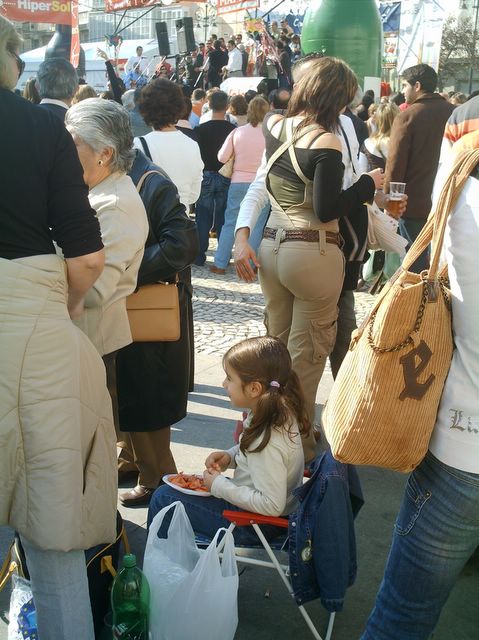
By the time my girlfriend and I arrived at Ostionada on Sunday, the first chorus/band had already played and finished and the line leading to the official city stands – full of free beer, glasses of sherry, pickled peppers and, of course, plastic plates piled high with raw oysters and lemon wedges – was already as far as the eye could see. It was two o’clock in the afternoon. We decided to pass on the free oysters and booze this time and went over to a private stand where I bought a large cerveza for half the price they would normally be selling it. As for the oysters, we figured we would try them another day. There was a lot of cheap beer to drink and, as far as my girlfriend was concerned, loads of pictures to take. As she ducked in and out of the crowds happily snapping away, I stood in the middle of the square contently sipping from my cold cup and listening to the current chorus. I lifted my eyes and looked around. Loads of people (15,000 by today’s newspaper estimates) stood with their families and friends. Some were drinking from glasses while others were slurping from shells. The booze was ridiculously cheap – even free if you were willing to wait long enough in a queue – and the food was plentiful. Good cheer filled the jubilant atmosphere. It was just like Carnaval. I knew this was a true fiesta, if anything, because Granny and the little sister had tagged along too. A real fiesta in the spirit of Carnaval isn’t just for unemployed people in their twenties and thirties who still live at home, it’s for the whole family. Its’s a time for all generations and all loved ones, regardless of age or occupational status, to drink loads of cheap alcohol and slurp down tons of raw seafood to the point of vomiting from food-poising – and to do it together. It almost brought a tear to my eye as my girlfriend eventually found me in the crowd and said, "I got a great picture of this drunk guy at a stand trying to pry open some oysters!"


"That better be an oyster between your legs, mister."


This guy definitely isn't a Gaditano...
"Why the hell did I spend two hours in line for OYSTERS?!?"

We stayed at Oyster Fest for most of the afternoon and, as far as I can recall, it was the only time siesta didn’t seem to occur in the south of Spain. First 3 o’clock, then 4 and 5, all came and went without the slightest hint of the masses getting restless and heading home. I suppose when it comes to having to choose between siesta and fiesta – especially one where there’s free stuff to be had – the latter always wins out. We, however, had had our fill by then. My girlfriend took her last few shots of Gaditanos and their event as I ordered one last beer and drank it... soon to be homeward bound.


Everyone has the right to a little pre-CARNAVAL fun, even the good ol' room mates


"Hey guys, I hope we don't stay too long.
You know I DO have school tomorrow."

We only re-emerged from our cozy abode hours later, after the sun had set, in order to go and meet some friends for our traditional Sunday night game of Scrabble and chess. As we crossed the square where Ostionada had begun all those hours ago, we were surprised to see that there were still some fiesta-revelers – again mostly twenty- and thirty-somethings – going strong. (Who am I kidding? We weren’t surprised in the least to see them still there!) They were still slurping away and drinking merrily, and would most likely continue doing so well into the wee hours of the night. After all, they probably didn’t have any job to go to in the morning and Gran’Ma would happily be keeping the bedroom’s midnight oil burning. The only person they’d have to be careful not to wake while stumbling home drunk was the little sister – she’s one of the few people in the household who actually has to do something in the morning and go to school.


When there's free beer to be had, who knows how long the fiesta can last?

As for now, the only hard part for the Gaditanos is that they’ll have to wait until the end of February to experience Carnaval again. They actually have to wait for the real thing this time. That is, unless of course there’s another pre-Carnaval in the not too distant future... Anyone who knows the locals and knows how fiesta courses through their veins won’t be surprised to hear that there is. Next week’s city-sponsored weekend festival is Erizada, or Sea-Urchin Fest. As far as I’m concerned, a fiesta in honor of, and which serves, sea urchins is not something that deserves celebrating. But then again, when you haven’t worked in three years, can’t get your girlfriend past the bedroom door or Granny, and your kid sister wakes you up each and every morning as she gets ready for school – you need SOMETHING to occupy you from between now and Carnaval ...And a fiesta in honor of those thorny bottom-feeding invertebrates seems like just the thing to do it.

Monday, January 16, 2006

Under Construction [JANUARY 15, 2006]

I had had quite a few drinks the other day so when I woke up abruptly the next morning with a pounding headache beating relentlessly through my skull, it came as no surprise. As I slowly managed to open my eyes, I rolled over and saw that my girlfriend had just woken up as well.
"Good morning, honey," I whispered.
She smiled in silence, her eyebrows a bit furrowed.
"My head is KILLING me... It’s like there’s a drill coming through my skull and it just won’t stop."
She looked at me perplexedly, yawned, and asked, "Are you serious?"
"Well, yeah, of course I am. Thanks for the sympathy though..." I added sarcastically. "You wouldn’t believe the banging."
"Sure I would. The whole building can probably hear it. That’s not your hangover. They’re doing some construction next door again."
"Really? So the drill that’s now going through my..."
"Is the drill," she interrupted, "that is actually going through the wall behind us. The thing woke me up too. You’d have to be deaf not to hear it!"
I paused for a moment, concentrated all my day-after-boozin’ powers on listening to what was going on behind the bed’s headboard and, low and behold, my girlfriend was right once again. It wasn’t a mental-drill brought on by a now forgotten mix of liquor that was causing my headache, but a power-drill being operated by some sweaty Spaniard named Miguel, Rodrigo, Diego, or God knows what.


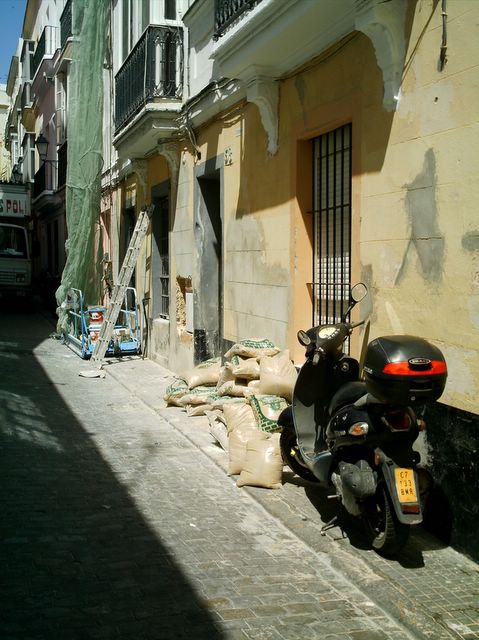
Just another street-corner "Under Construction"

Fortunately, the unidentified laborer on the other side of our bedroom wall knew what he was doing and didn’t drill a clumsy hole completely through to our side of the building. But the entire morning’s events did bring one thing to mind: the Spanish are construction freaks. You can see it all over Cádiz every time you go for a walk as buildings to the left and right, down each and every street, avenue, or alley, are covered with scaffolding or debris-catching nets. They love digging, building, banging and drilling. But most of all, they especially love doing these things when it’s connected with knocking things down. A Spanish demolition team can take down a building or strip a room bare quicker than you can say ¿Que pasa? but can take months, if not years, to even begin to put something back in its place. I can’t really blame them because, I mean, what kind of guy doesn’t like to knock things down and take them apart. It’s a basic male instinct that goes back to that first time we saw Dad using a drill or hammer and asked, "Oooo... Can I try? Pleaasse!?!"


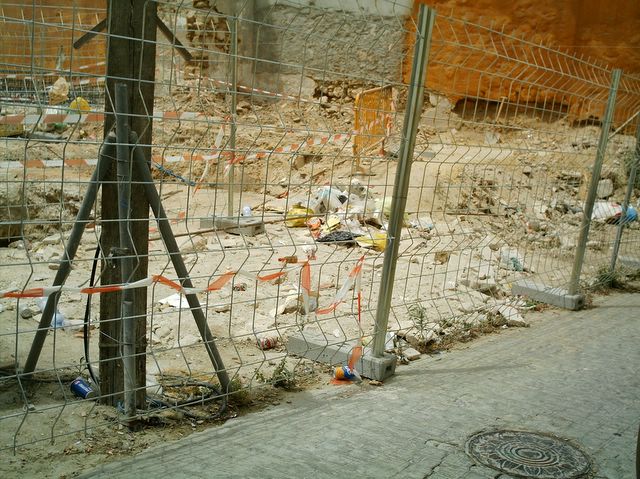
Another littered lot waiting...
"If they can bring 'em down, why can't they put 'em up?"

The thing is, most men outgrow that drill and hammer phase in their mid- to late- teens or, at the latest, early twenties. We realize that there are other, more interesting tools that can bring about utter havoc, chaos, and complete destruction – such as the power-saw and gas welder to name a few – and others that call for a more delicate touch – such as the screwdriver or caulking-gun. We quickly incorporate this wide range of accessories into our handyman repertoire and, for the most part, succeed in getting the job done unless our wives are inevitably right and, at the end of the day, we have to suck it in and call for the professionals... a local plumber or electrician. Now those guys have really interesting tools. In Spain, however, it seems no one ever outgrows the drill and hammer phase. If there’s a problem, bang it with a hammer. If that doesn’t work and, as a last resort, try drilling it. Re-tiling the bathroom walls and floor? Bang it. Fixing that leak coming from the kitchen sink? Bang it. Oiling those squeaky door hinges? Bang it. TV reception not too good? Bang it or, after a few tries, drill it. Something’s bound to happen. The noise pollution from all this banging and drilling in the name of construction can drive you mad. Anyone who has ever lived in Spain knows what I’m talking about and, if you don’t, count yourself lucky.


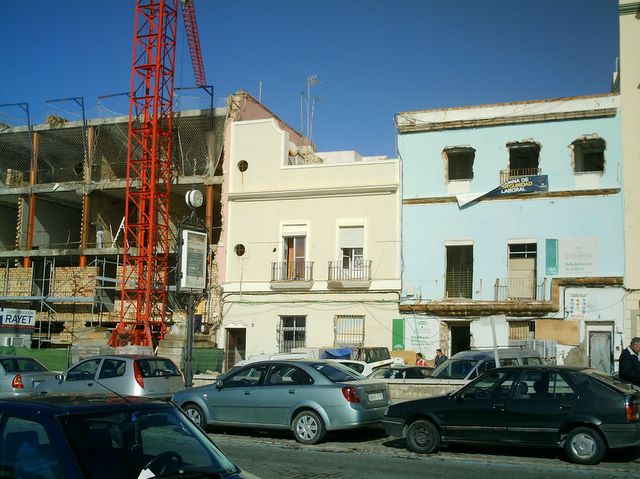
I'd hate to be a tenant in that middle building!

My girlfriend and I are one of the lucky ones this year because we live in a pretty old building (the plaque outside says 1856) and the walls and ceiling are thick enough to deter most of the neighborly construction sounds. That is, unless of course someone is actually drilling into the bedroom wall itself. We’ve also been, for the most part, very lucky because despite the age of our building, we haven’t really needed any work done on it... Well, that is if you don’t consider the time our ceiling collapsed on us while we were sleeping (see ¡El cielo ha caido! (The heavens have fallen!) [MAY 22, 2005]).

When I was living in Madrid though, in a relatively new building and on the eighth floor, my roommates and I almost went crazy from the noise of a next-door complex that was nearing completion and only had the bathrooms left to be done. Bang! Bang! Bang! all day long for half a year. We were puzzled – What was taking so long and what kind of a plumber uses a hammer that much? We eventually even started joking that Spanish plumbers had no other tools at their disposal but dozens of hammers neatly arranged – according to size – in their fold-out tool boxes and, depending on the task at hand, would take out the appropriately sized hammer and begin banging away. "Hmm, faucet problems. This looks like a job for the 9-centimeter (3-inch) hammer." Every morning, starting at six, the banging would begin. It wouldn’t let up (as I later found out when I stayed home sick one day) until about ten or eleven, when most people were at work anyway, and would start up again during lunchtime and siesta, when most people would once again return home. Then the construction workers would take a second break during the entire afternoon and start up the banging again in the evening, continuing until eight or nine o’clock. It was as if the construction crews had specifically designed their work schedule to coincide with the time when most people would be at home and trying to relax. If it was likely to be a time of the day when people were busy at work and there was no one to disturb, then they’d be smoking cigarettes, chatting away, or taking a coffee break. I’ve heard the same type of stories from friends who live in new buildings here in Cádiz too.


There's the equipment, but where's the crew???


"Screw work, did you guys see the football game last night?"

I do have to admit, though, that despite the fact that there appear to be so many easy-going, hammer-wielding construction workers who seem to do nothing but bang and drill early in the morning, they do get the job done quite quickly once they set their minds to it. At least here in the old city they do. Don’t get me wrong – The amount of empty lots scattered with litter and rubble proudly displaying an "Under Construction" sign are immense in Cádiz and, in some cases, stay in the same state of disrepair for years as housing shortages and rising property prices cause residential issues that desperately need addressing here. But once construction does eventually start, as they’d been promising to do since those signs first went up, the job often gets done in record time. I’ve seen lots that have laid empty since the first day I stepped foot in Cádiz and had apparently been like that for years but, once the first load of concrete foundation was poured, a new four-storey home stood in its place in just a few months. And trust me, that’s no mean feat considering all the buildings in the old part of the city must be built with bricks and mortar which occasionally means using older construction techniques in order to ensure that the historic central district retains its distinct architectural heritage. Of course this isn’t always the case and some buildings have had that scaffolding on the outside for ages, but I think they’re more the exception than the rule.


When's the construction gonna start? We've been waiting for years...


...but only three months after they laid the first brick!

The only thing I can’t figure out is how this construction, when it does eventually occur, can be carried out with just a few hammers and a drill every now and then? And why do Miguel, Rodrigo, Diego and every one else in their posse have to be so damn noisy when they go about doing it? But I’m confident that, one day, they’ll all learn to use such other fascinating tools as the power-sander, the jackhammer, the blowtorch, and even a simple plumber’s wrench. After all, this is the twenty-first century and there are a lot more noisier tools out there that the Spanish construction crews could easily adopt. I’m sure they’d be happy to at least possess the ability to get the job done more quickly while, in fact, inconveniencing the entire population even more with their early morning banging and drilling decibel-fests. Hopefully, I’ll still be living in my virtually soundproof apartment by then... and one of those jackhammers won’t make it through the bed’s headboard while I’m sleeping either.

Sunday, January 1, 2006

Temporarily Away...

Sorry for not writing an article this week everyone. My girlfriend and I decided to make the most out of our Christmas holiday and tour southern Spain for two weeks. In fact, I'm actually writing this from a cyber-cafe in Granada. Anyway, enjoy the New Year and read some of my older articles if you're desperate for some more Big Tits and Pussy... Don't worry, I'll be back with a new one in a week!

---GC